FILMS
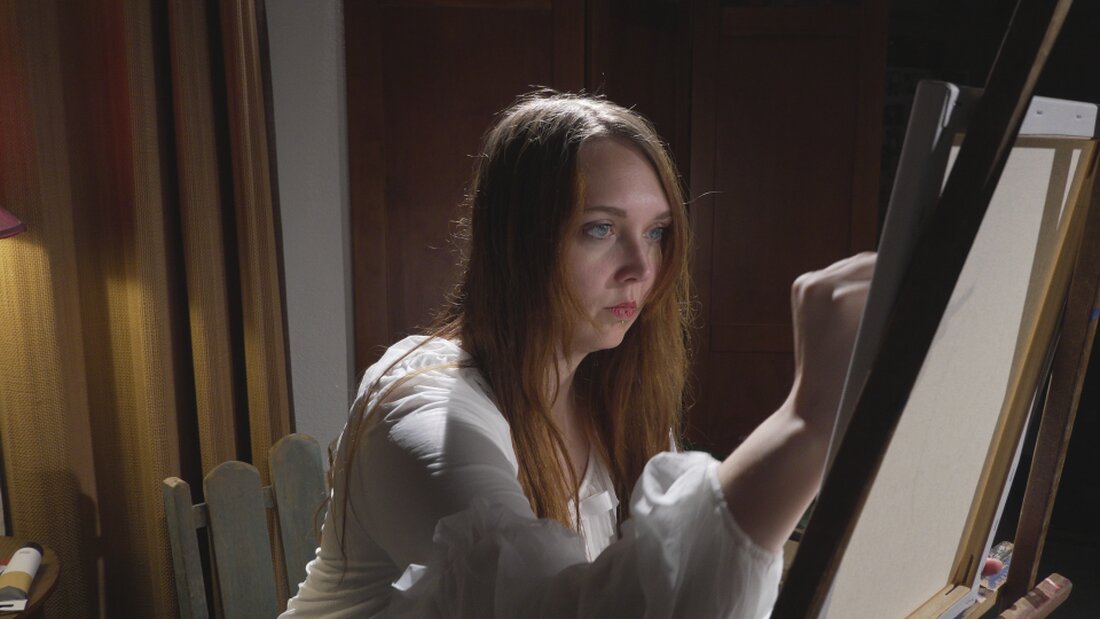
Megan Norton in Amy and Emily (In Production)
A live action feature length drama, Amy and Emily is being shot in the Sparks/Reno NV area and is currently about 2/3 completed in shooting. The film is a psychological drama about an artist who is severely disturbed and discovers an alternate reality, Althyria. This other world is based upon the previous feature film, Althyria which was abandoned. It is also intended to combine the animation of Sisters of the Seventh Pavilion, which was paused in order for Amy and Emily to begin shooting.
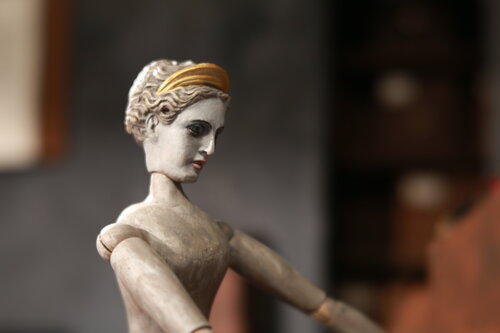
Stop Motion Animation, 15 minutes
Fourth in a series of animated films set in the world of Althyria.
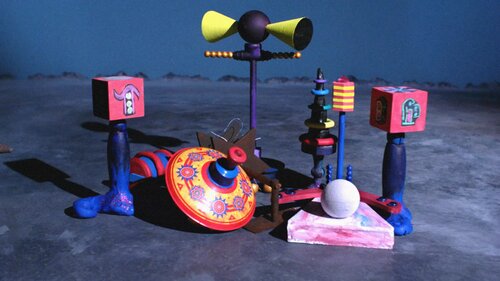
Third in a series set in the metaphysical world of Althyria, the film depicts lost toys in a desolate landscape attempting to find their way home. It was partly inspired by the reports of certain dreams experienced by scientists and philosophers which seemed nonsensical but actually led to new discoveries.
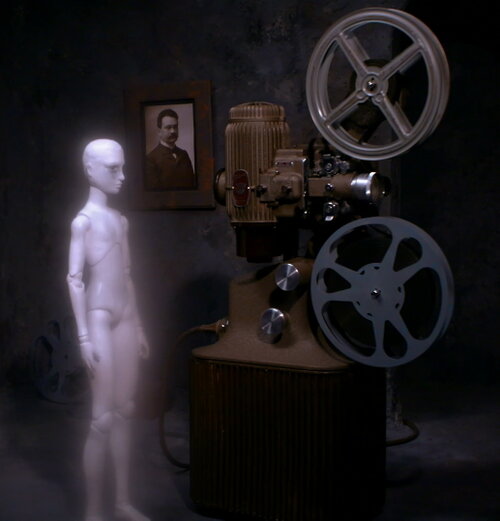
The Projectionist of Being (2021)
Stop Motion Animation, 17 minutes
A stop-motion animation film, set in the metaphysical world of Althyria. It began as a meditation on the block universe but morphed into a stream-of-consciousness approach - though one that was very long and drawn out by the process of animation.

The Metaphysician's Dream (2019)
Stop Motion Animation, 15 minutes
A stop-motion animation film using handmade puppets, miniature sets and props, inspired by the works of Giorgio de Chirico, Ives Tanguy and the Brothers Quay. An earlier version of the film premiered at the International Surrealist Film Festival 2010, and Zero Film Festival Los Angeles 2010, but it was later withdrawn and developed into what became "The Metaphysician's Dream." Only a few scenes of the first version were used in the later film, but the main puppet became its "star." The film features a music score composed for flute, harp, celesta, musical glasses, viola, bass and analog synthesizer. The music was performed by the Vienna Symphonic Library virtual orchestra.
A review by Nicola Gocic -
Inspired by the work of Giorgo de Chirico, Yves Tanguy, Jean Cocteau and the Quay brothers, The Metaphysician's Dream is another superb addition to the pantheon of surreal stop-motion films. Elevating its classy appeal is the fact that it is virtually a one-man show - William Kersten is its director, animator, cinematographer, production designer and music composer, with the elegant score of oneiric proportions performed by the Vienna Symphonic Library software.
Inviting you into a vast, phantasmagorical world is a mellifluous and somewhat mysterious opening track which accompanies decidedly archaic, silent era-inspired title card, credits and epigraph, and fades to silence pierced by a subtle needle-on-a-worn-record crackling. After the curtains are drawn open, we enter a delightfully retro atelier-laboratory where a couple of scientists or rather, alchemists are about to consult their books and perform a series of puzzling experiments resulting in an interdimensional exchange of sorts. As the title suggests, a highly unconventional story plays out like a dream, so most of it is left to the viewer to decipher, or simply allow it to be smitten by its magic.
Amongst the apparatuses and contraptions of obscure purpose, neatly shelved bottles containing various potions, and concrete blocks turned cosmic kaleidoscopes, one can easily get lost, but the non-speaking protagonists seem to know exactly what they are doing. Appearing as wooden mannequin dolls with heads of expressionless Hellenistic sculptures, they may be viewed as modest embodiments of some mystical, supernatural entities who hold the secrets of the multiverse, and are in complete control of time-space. As they establish a link between the past and the future through their present (and cryptic / esoteric) actions, Kersten approaches his cosmogonic fantasy (and perfection) with high attention to details, and in a tight, fifteen-minute frame, he delivers spellbinding imagery in spades, not wasting a single frame of a wonderful old-school animation. Beiges, browns and grays of his characters' bodies and sets are beautifully complemented by vivid colors of props and lighting, whereby the soft focus is frequently used to enhance a hypnotic, ethereal atmosphere. On top of that, The Metaphysician's Dream is paced so smoothly that watching it feels like drifting on a cloud. Kersten's meticulousness, vitality and creativity are pure inspiration...

Althyria (2017-2018)
Video, 60 minutes
with Zakotah Sevon, Ryan Costello, Luke Allen
"Althyria" is a feature length psychological mystery starring Zakotah Sevon, filmed in a low-key black and white style inspired by the subtle horror films of Val Lewton in the 1940s. Shot in 4k digital video, it is the story of a woman searching for her identical twin sister, an artist who believes her dreams of another world called "Althyria" are real. The music score is composed for orchestra in the "Leitmotiof" style of the studio films of the 40s with a symphonic development of separate themes for the various characters and situations. It was completed in 2018 and the premiere of the film was at Reno Little Theater on November 26, 2018.

Zakotah Sevon as twin sisters Helen and Ruth Baxter

Ruth finds herself transformed into her sister

Ruth is transported into the dream world of Althyria

The Pale Man (Ryan Costello)
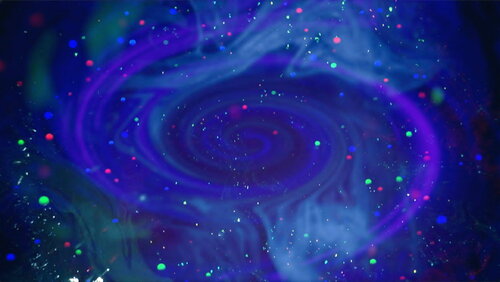
Lumia (2007-2013)
Video, 9 hours
Inspired by the works of Thomas Wilfred and Jordan Belson, Kersten began creating physical optical devices and techniques to to make "lumia" images - an art of abstract light forms that Wilfred invented in the early 20th century. Purely "analog" non-digital means were used to create these images, in order to explore the complex interactions of the physical optics and lenses, interacting refractions and reflections, and non-synchronized movements that take place with seemingly simple devices of motorized color wheels, reflective/refractive surfaces, intricate color filters, and constantly changing light sources. This experimentation has resulted in a large amount of original footage, which has so far been edited into three Lumia works. Part of the non-digital concept behind this work is to use a similarly analog sound: a Roland analog synthesizer, Moog ring modulator, spring reverb and analog delay in order to create the soundtrack for these images.
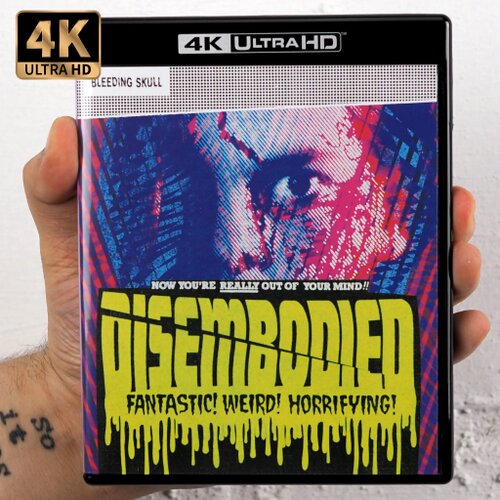
Disembodied (1998)
16mm Film, 88 minutes
with Anastasia Woolverton, Hannah Cooper, Patricia Mathews, George Randolph
Three filmmakers, William Kersten, James Diederichsen and Robert A. Richardson created the independent motion picture Disembodied in 1994-1996, shooting on 16mm film with a spring-wound Bolex H16 camera and a borrowed Auricon sound camera. No digital equipment was available to the filmmakers at that time. The film was made on sets constructed by Kersten and Richardson in a rented warehouse and on location on the streets of Reno. No money was available for permits so the filmmakers simply shot the scenes as quickly as possible and hurried out of the area.
Originally, the story was entitled "Connie's Dream" and was more surreal than the final film, drawing inspiration from the low budget 50s independent film "Daughter of Horror" which Kersten had first seen on VHS in Albuquerque and watched "too many times" according to Diederichsen. An attempt was made to form the story into a more coherent plotline than the first draft, though it retained many of the dream elements. At the time, the film was entitled "Aberration." All of the makeup FX were created by Diederichsen, baking latex in the oven of his small house. Diederichsen also played the role of the Night Clerk who works at the Grand Hotel. This edifice in downtown Reno was demolished not long after the film was completed. The interior of the actual building was not used, but represented entirely by the sets.
The actors were all from the Reno area. Anastasia Woolverton starred in the main role as Connie Sproutz. Hannah Cooper played the friendly Trixie Turner who lived next door. Also in the cast along were veterans of Reno area theater including George Randolph, who played Dr. Sigmund Sylvanus, Special Investigator of Plasmaster Corporation. Performing the role of the nosy Cleaning Lady was Patricia Mathews
The film was edited and musically scored by Kersten, using an editing bench consisting of film rewinds, a mechanical synchronizer with a sound pickup head, and an old Moviola. This approach to editing resulted in a large amount of time and labor especially in scenes with many takes. The difficulty at one point resulted in Kersten's fatigue and Diederichsen's assistance polishing the final cut. The music was originally composed and performed by Kersten on a Korg 01W keyboard, though much later (2015) he rescored the entire film with full orchestral music played by virtual orchestra in a 1950s sci-fi music style.
In 1998 the film was re-titled "Disembodied" and picked up for distribution first by a shady distributor that made money from the film, distributing it on VHS tape in the American South and in Japan, but never payed the filmmakers anything even though the film was favorably reviewed in Fangoria and Psychotronic magazines and started to get attention from horror/sci-fi fans. After several years Kersten took the film out of distribution. It appeared here and there in pirated copies on the internet, but then went underground for 15 years. The negative rolls sat in a storage box in a garage until finally, in 2015, the film was transferred onto HD video. This allowed a new version to be made, with special FX and the orchestral music score added. Another semi-criminal distributor released this version and then it was withdrawn again after no payments, even though it was entered into festivals, and won Best Sci-Fi at Madhouse Movies 2017 as well as being an Official Selection of the Bloody Horror International 2017 and 13Horror.com 2017 festivals. Finally, the film was picked up by a reputable company, Bleeding Skull working with the Vinegar Syndrome label, and has been transferred in a new 4k version from the original negative and received many reviews from fans.

Daughter of Horror (1955)
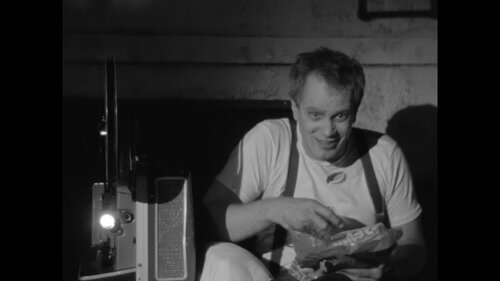
James Diederichsen as The Night Clerk
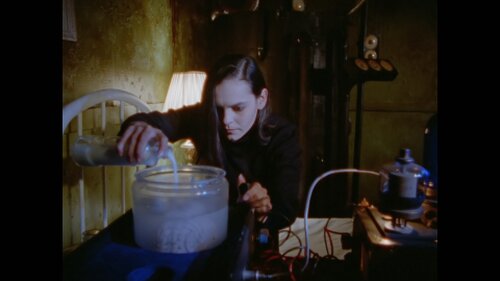
Anastasia Woolverton as Connie Sproutz

Hannah Cooper as Trixie Turner

George Randolph as Dr. Sigmind Sylvanus

Patricia Mathews as The Cleaning Lady
Remember Tomorrow (1989)
16mm Film, 84 minutes
with Michael Replogle, Brenda Beck
Shot over a period of two years "Remember Tomorrow" is a tragic love story involving time travel set in the mythical Harbor City, California. The actors were from the Reno area, and the sets were built by Kersten and assistant director Robert Richardson alone in a warehouse, representing a 40 foot long 12 foot high hotel front, a piano bar, hotel corridor and numerous other interiors. Many locations were filmed including both Pyramid Lake representing an ocean beach as well as an actual Californian beach. The music was composed and recorded with a small orchestra made up of university students and was an elaborate, symphonic score in a romantic style featuring a piano solo with orchestra. The film was premiered at the Keystone Cinema in 1989, showing once, then disappeared into a storage cabinet. The music was recently completed (2019) in a new recording now available at Amazon and the full score and parts available at Sheet Music Plus.
Warped (1984)
Super 8mm Film, 59 minutes
with Brenda Beck, Blair Anthony, David Hagen and Roge Rousch
Kersten's first completed dramatic film was shot in Super 8mm and was a science fiction story about a woman scientist who attempts to travel back in time to save her mad artist sister from committing suicide. Ironically she only gets herself killed in an auto accident as a result, creating a fatal time loop. The irony is compounded by the fact that her sister was the driver, and committed suicide as a result of the trauma of killing her own sister. The laboratory was constructed in a physics room at the University of Nevada (loaned for free during the summer) with some large retro electrical machinery props built out of cardboard, masonite, dryer hoses, glass lamp shades, discarded electrical parts and a plethora of dials and light bulbs intended to depict a teleportation device that unexpectedly morphs into a time machine. The film premiered at the Scrugham Engineering lecture room at the University of Nevada Reno in 1984.
Images and Music Copyright 2003-2020 William Kersten